
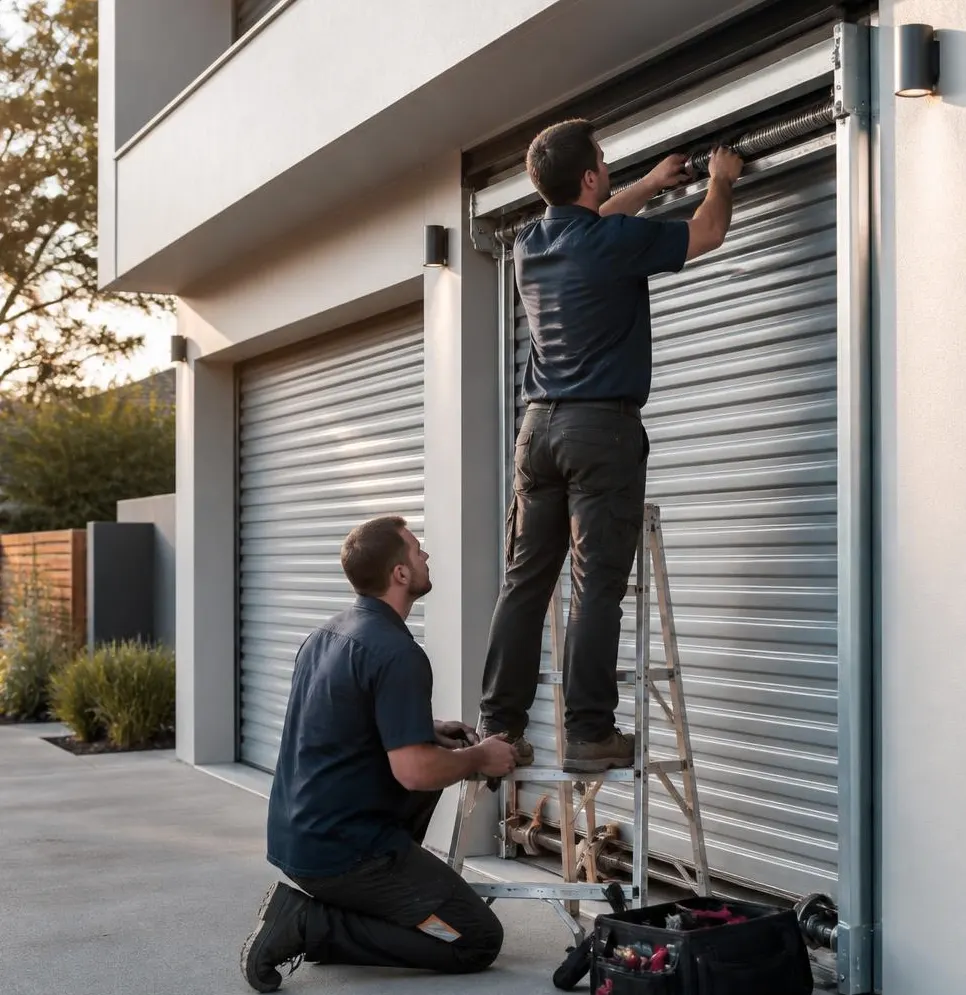
A typical call starts the same way: the door won't budge, or it slammed down hard on its own. By the time a technician gets there, the torsion spring is usually split clean in half above the center bracket, or one of the two extension springs has stretched so far it's lost all tension. The homeowner almost always says the same thing afterward — "it had been making a weird noise for weeks." Springs rarely fail without warning. They just fail quietly enough that most people don't know what they're looking at.
Here's a walk-through you can do in your own garage in about ten minutes, no tools required beyond your eyes and ears.
The Checklist
1. Look for a visible gap in the torsion spring coils
If you have a torsion spring mounted horizontally above the door, look closely at the coils. A healthy spring has coils sitting tight against each other. A gap of a quarter-inch or more anywhere along the spring means it's stretched or starting to separate — a sign it's lost tension and is closer to failure than it looks.
2. Run the balance test
With the door closed, pull the release cord to disconnect the opener, then lift the door manually about halfway. Let go. A balanced door with healthy springs stays put. If it drifts down on its own or shoots upward, the springs are no longer carrying their share of the door's weight, which also means the opener has been working overtime to compensate.
3. Listen for popping, creaking, or grinding during operation
Smooth operation should be close to silent at the spring itself. A popping or cracking sound right when the door starts to move often means metal fatigue inside the coil — micro-fractures that haven't given way yet, but will. Grinding usually points to a dry or rusted spring rubbing against the shaft.
4. Watch the door's speed on the way up and down
A door that used to open at a steady pace but now jerks, hesitates, or suddenly speeds up partway through its travel is telling you the spring tension has changed. Sudden drops near the top or bottom of the cycle are a classic sign of a spring losing its grip.
5. Check extension springs for stretch and separation
If your setup uses extension springs (the long springs that run along the horizontal tracks rather than above the door), stretch is easier to spot. Compare both springs side by side — they should look identical in length and coil spacing. If one is visibly longer or looser than the other, it's wearing out faster and will likely fail first, throwing the door off balance in the meantime.
6. Inspect for rust, pitting, or discoloration
This one matters more here than in drier climates. Humidity and salt air work into spring coils over time, even on doors that look fine from a few feet away. Rust doesn't just sit on the surface — it pits the metal and creates weak points where a coil is more likely to snap under tension. Any orange streaking or flaking on the coils is worth a closer look, especially on doors facing prevailing coastal winds.
7. Know roughly how old the springs are
Garage door springs are rated by cycle count (one cycle = one full open-and-close), and most residential springs are built for somewhere in the 10,000–15,000 cycle range. If you open your garage door a few times a day, that adds up faster than most people expect. If you don't know the age of your springs, or they've never been replaced, treat that unknown as a reason to get them looked at sooner rather than later.
Why This Matters More in Indiantown's Climate
Heat and humidity cause metal to expand and contract more than it would in a milder climate, which accelerates fatigue in springs that are already under constant tension. Hurricane season adds another layer — doors built or reinforced to meet wind-load requirements put more stress on the spring system every time the door cycles, especially on garages that have been retrofitted with heavier wind-rated panels. If your door feels harder to lift by hand than it used to, or the opener strains more than it did a year ago, that's often the spring system quietly losing capacity under the extra load.
When to Call Indiantown Garage Door Repair
If you've gone through this checklist and found a gap in the coils, uneven extension springs, rust pitting, or a door that won't hold its balance, don't wait for the snap — a spring letting go under tension can damage the opener, bend the tracks, or cause injury if someone's nearby. Our Garage Door Spring Repair service replaces worn torsion or extension springs with the correct size and tension for your door, matched to local wind-load requirements where applicable. If it's been a while since anyone's inspected your system, our Garage Door Tune-Up & Maintenance visit covers spring condition along with cables, rollers, and hardware, so small issues get caught before they turn into a Saturday morning with a door stuck halfway open.
If something on this list sounded familiar, give Indiantown Garage Door Repair a call. We serve homes and businesses throughout Indiantown, FL and the surrounding Martin County area, and we'd rather replace a tired spring on our schedule than yours.