
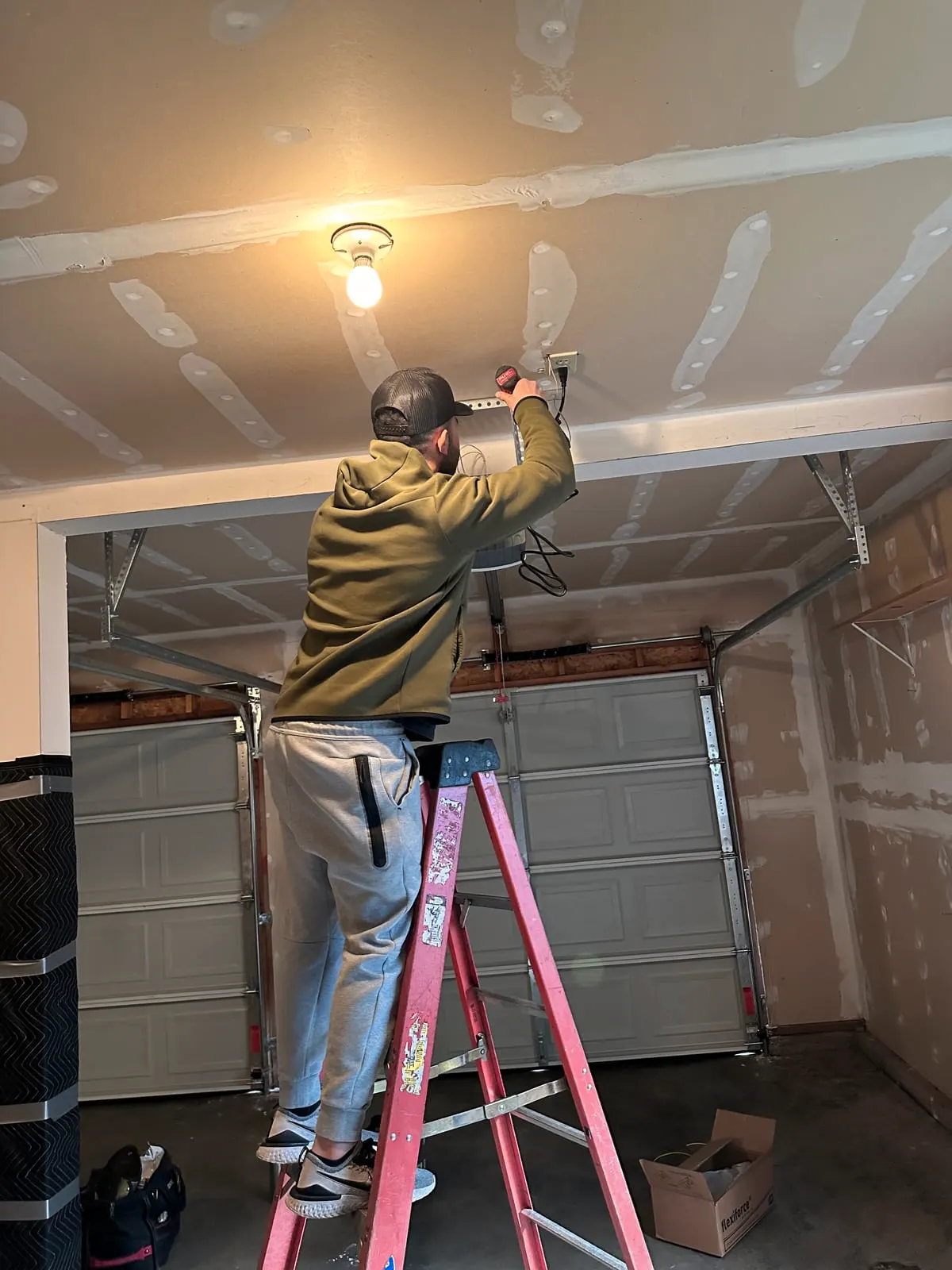
What a Technician Hears on a Typical Noise Call
Most calls about a loud opener start the same way: "It's been getting worse for weeks, and now it wakes up the whole house." On the service visit, the pattern is usually familiar. A quick walk-through turns up loose mounting bolts on the track brackets, dry or cracked rollers, a chain that's slapping against the rail, and hardware that's worked itself loose from months of humidity swelling the wood jamb it's screwed into. Salt-laden air near the coastal parts of the service area speeds up corrosion on bolts and springs, which adds rattle and grind on top of normal wear. None of this happens overnight — it builds up, and by the time it's loud enough to notice, several small problems are usually stacking on top of each other.
Tools You'll Need
- Socket wrench or ratchet set
- Adjustable wrench
- Silicone-based garage door lubricant (avoid heavy grease, which collects dust in humid air)
- Sturdy stepladder
- Safety glasses
- Rubber isolation kit (optional, for the opener motor mount)
Step-by-Step: Quieting the Door
1. Tighten Every Bolt and Bracket
Work your way along the track, hinges, and header bracket with a socket wrench, snugging anything that's loose. Humidity and heat cause wood framing to expand and contract, which gradually loosens lag screws over a season. This single step solves more noise complaints than any other fix on this list.
2. Lubricate the Moving Parts
Apply a light coat of silicone-based lubricant to the rollers, hinges, and the track itself. Skip the springs if they look rusted or worn — that's a sign for a technician, not a lubrication job. Avoid household oils and thick grease; in this climate they attract grit and gum up fast.
3. Inspect and Replace Worn Rollers
Steel rollers without nylon sleeves are one of the loudest parts on an older door. Look for flat spots, cracks, or rollers that wobble in their stems. Swapping to nylon rollers is a straightforward DIY job on most residential doors and cuts noise noticeably — it's often the single biggest upgrade for the effort involved.
4. Check Chain or Belt Tension
A loose chain-drive opener will slap against the rail with every open and close cycle. Most openers have a tensioner near the motor head; consult your owner's manual before adjusting, since over-tightening strains the motor. If you're not confident reading the tension gauge correctly, this is a good point to hand it off to a technician rather than guess.
5. Add Vibration Isolation
Rubber isolators between the opener's motor bracket and the ceiling joist absorb a surprising amount of the hum and rattle that travels into living spaces above or next to the garage. These are inexpensive and install in a few minutes with the opener powered off.
6. Decide If It's Time for a Belt-Drive Swap
Chain-drive openers are mechanically noisy by design — metal links over metal gears. If you've done everything above and the opener is still loud, especially in a garage that shares a wall with a bedroom or living area, a belt-drive opener is the real fix. Belt drives run on a reinforced rubber belt instead of a chain, cutting operational noise dramatically. This isn't a weekend swap-in on most setups; it typically means a full opener installation with proper mounting and safety sensor alignment.
What's DIY and What Isn't
Tightening hardware, lubricating hinges and rollers, and swapping worn rollers are all reasonable homeowner tasks with basic tools. Adjusting chain or belt tension, diagnosing a grinding motor gearbox, or replacing an opener outright cross into technician territory — partly for safety, and partly because a poorly set tension or misaligned belt-drive unit can wear out just as fast as the noisy one it replaced.
When to Call Indiantown Garage Door Repair
If you've worked through these steps and the door is still loud, or if you noticed grinding, grating, or a spring that looks stretched or rusted while you were under there, stop and call us. We handle Garage Door Opener Installation for homeowners ready to move to a quieter belt-drive unit, and our Garage Door Tune-Up & Maintenance service covers the full inspection — hardware, rollers, cables, and spring condition — that catches small issues before they turn into a 2 a.m. racket or a stuck door during storm season.
Ready for a quieter garage door? Call Indiantown Garage Door Repair today to schedule a tune-up or opener upgrade anywhere in Indiantown, FL and the surrounding area.