
The Fix Everyone Tries First (And Why It Backfires)
When a garage door won't lift on a cold morning, the instinct is to hit the remote again and again, or to march outside and yank the door up by hand. It's tempting because the door usually looks fine — no visible damage, no obvious break — so it feels like it just needs a little extra push. But repeated remote clicks make the opener motor strain against resistance it isn't built to fight, and manual force on a door that's partially stuck can bend tracks or snap cables that were otherwise healthy. A few homeowners even pour hot water along the bottom seal to melt whatever's holding it down, which can warp the weather stripping or send water into the slab seam, making the sticking worse the next cold morning.
The better move is to stop, look, and listen. The symptoms themselves point to the cause, and the cause determines the fix.
What the Symptoms Are Telling You
- Door won't move at all, opener hums or clicks but nothing happens: often the bottom seal is bonded to the slab, or the opener has hit its force limit.
- Door opens but crawls up slower than usual: points to stiffened lubricant on rollers and hinges, or a spring that's lost a bit of lift.
- Loud groan or bang right as it starts moving: suggests something let go suddenly — a thin layer of moisture or a stuck point breaking free, which stresses cables and brackets.
- Door opens unevenly, one side lagging: usually track alignment, not the cold itself, though cold makes existing misalignment more obvious.
The Causes, Checked in Order
1. The Bottom Weather Seal Is Bonded to the Slab
This is the first thing a technician checks because it's the most common and the easiest to rule out. Indiantown's humidity means the rubber seal along the bottom of the door is almost always slightly damp. On a rare cold snap, that moisture can form a thin film that acts like glue between the seal and the concrete. The fix is simple: gently break the seal loose by hand-pressure from the inside before using the opener, then let the slab and seal dry out. If the seal has gone stiff or cracked from repeated humidity swings, replacing it is cheap and prevents the same thing from happening again.
2. Thickened Lubricant on Rollers and Hinges
Grease and lubricant naturally thicken in cooler temperatures, and in a humid climate like this one, old lubricant often has moisture mixed into it already, making it gummier than it should be. That extra resistance is enough to make a door feel sluggish even when nothing is actually broken. The fix is a full clean-and-relube of the rollers, hinges, and track with a lubricant rated for both heat and moisture — not household oil, which attracts dust and grit.
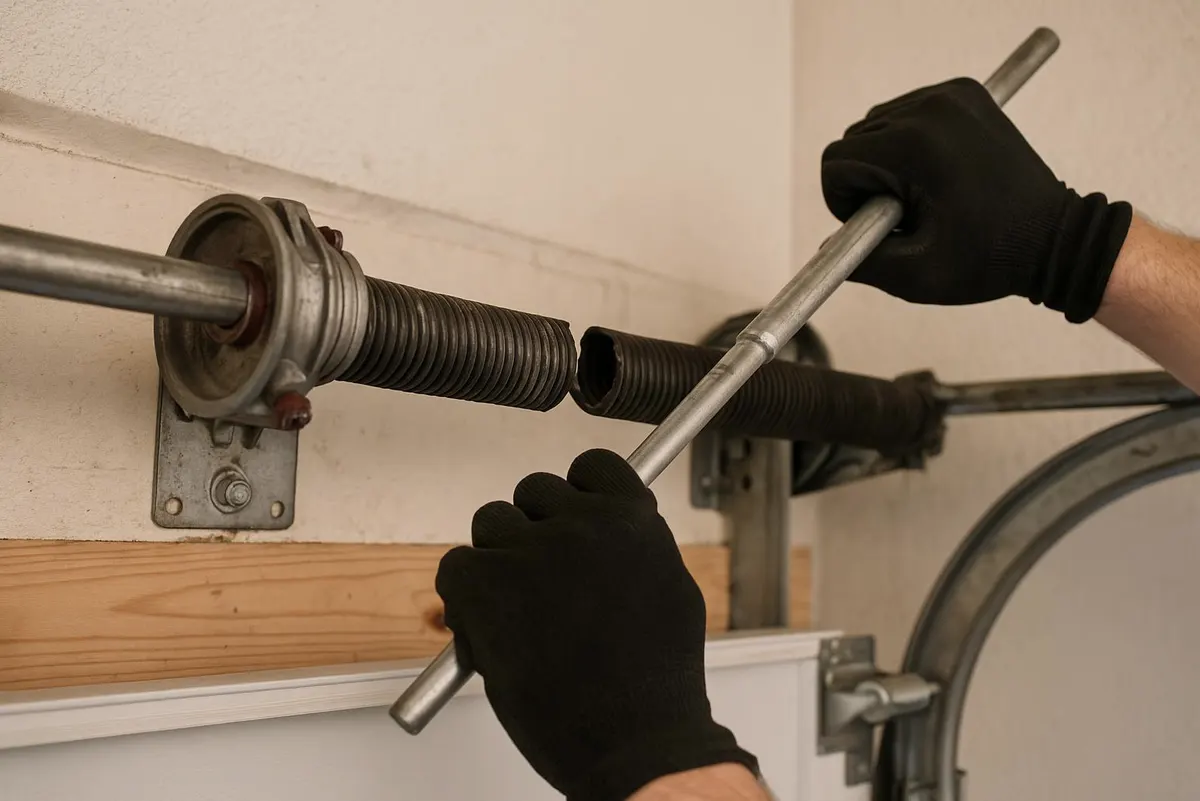
3. Spring Tension Has Shifted
Metal contracts slightly as it cools, and torsion springs can lose a small amount of effective tension on a cold morning. It's usually not enough to stop the door outright, but combined with a stuck seal or stiff rollers, it can tip a marginal door into one that won't lift. A technician checks balance by disconnecting the opener and lifting the door by hand — if it's heavy or drops on its own, the spring needs adjustment or replacement. This is not a homeowner repair; torsion springs are under serious tension and can cause injury if handled without the right tools.
4. Track Alignment and Hardware
Humidity causes wood door jambs and frames to swell and shrink through the year, which can gradually loosen the screws holding the track in place. A door that's slightly off-track may run fine most of the time but bind up the moment rollers are stiffer from the cold. The check here is visual: looking for gaps between rollers and track, bent sections, or loose mounting brackets. The fix ranges from re-tightening hardware to a full track realignment.
5. Opener Force Settings and Limits
If everything mechanical checks out, the last stop is the opener itself. Modern openers have a force setting that reverses the door if it meets resistance, as a safety feature. A door that's heavier than usual — even briefly, from a stuck seal or stiff rollers — can trigger that reversal repeatedly, making it look like the opener is broken when it's actually doing its job. Adjusting the force setting is only appropriate once the actual resistance has been fixed; cranking the force up without fixing the root cause just hides a problem until a cable or spring fails.
When to Call Indiantown Garage Door Repair
If the door still won't move smoothly after the seal is unstuck and the hardware looks fine, or if you hear grinding, see a sagging spring, or notice the door is off-track, it's time to call in a technician rather than keep testing it yourself. Indiantown Garage Door Repair handles everything from Garage Door Tune-Up & Maintenance — relubing hardware, checking balance, and tightening track hardware before the next weather swing — to Garage Door Spring Repair when tension has shifted enough to need replacement. We check the issue in the same order outlined above, so you're not paying to replace parts that aren't actually the problem.
If your garage door is sticking, straining, or groaning on these cooler mornings, call Indiantown Garage Door Repair today and get it sorted before it turns into a bigger repair.